Want to be in the loop?
subscribe to
our notification
Business News
CAI MEP-THI VAI PORT COMPLEX INEFFICIENT
Enterprises and experts pointed out this problem at a seminar held on Wednesday by the ministries of transport, and planning-investment, and the Japan International Cooperation Agency (JICA) to evaluate the performance of the Cai Mep-Thi Vai port complex.
It is costly to transport goods from HCMC or Binh Duong to Cai Mep-Thi Vai as the port complex does not have yards for empty containers, forcing enterprises to bring their goods to Cat Lai Port in HCMC, said Nguyen Thanh Tam, deputy director of HCMC-based company InterLog.
In addition, the time for transporting goods to other Asian countries from Cai Mep-Thi Vai is over ten days compared to only three days from Cat Lai Port in HCMC, leading enterprises to shun Cai Mep-Thi Vai, he said.
Le Duy Hiep, chairman of the Vietnam Logistics Business Association (VLA), said currently enterprises have to transport their goods by barge to avoid traffic jams on the road, thus spelling trouble for exporters.
What should be done now is to build roads and upgrade inland waterways linking Cai Mep-Thi Vai and nearby localities.
Hiep said another point that makes Cai Mep-Thi Vai unattractive is the lack of space for empty containers while there are nearly 40 depots for empty containers around ports in HCMC and Binh Duong.
It costs up to VND4.3 million (around US$192) to transport goods on a 40-kilometer section from Dong Nai’s Nhon Trach District to Cai Mep-Thi Vai but only around VND3.3 million to bring goods through a section of 80 kilometers from Nhon Trach to Cat Lai, he gave figures to prove his point.
According to the Vietnam Marine Administration, services at Cai Mep-Thi Vai have not been fully developed and along with its underdeveloped infrastructure, the port complex has been unattractive to transport firms.
As calculated, a port with a 600-meter pier should have an annual capacity of one million TEUs to boost the development of other services but the total capacity of six to seven piers at Cai Mep-Thi Vai is only 1.3 million TEUs per year compared to an annual designed capacity of eight million TEUs.
Cai Mep-Thi Vai port complex was commissioned in late January 2013 after four years of construction. The project was financed by Japan’s official development assistance (ODA) loans and Vietnam’s reciprocal capital.
Deputy Minister of Transport Nguyen Van Cong said the port complex can accommodate vessels of 160,000 DWT.
Work on roads linking the port with other localities has started, such as Ben Luc-Long Thanh and Bien Hoa-Vung Tau expressways, and when they are in place, the time for goods transport from the Mekong Delta to the port complex would be shortened.
Besides, the transport ministry is working on a project to dredge the Dong Tranh River to facilitate the inland waterway transport between HCMC and Cai Mep-Thi Vai.
In the future, if the project receives more funds from Japan or other foreign investors, the authorities will build Phuoc An Bridge.
The total volume of goods imported or exported through ports nationwide reached 427 million tons last year, up 14.5% year-on-year.
Source: The Saigon Times
Related News
MEMBER CORNER / PROMOTIONS
HCMC | CERTIFIED SUSTAINABILITY PROFESSIONAL (CSP) TRAINING | REGISTRATION OPEN
As sustainability becomes deeply embedded in corporate strategy and supply-chain operations across Vietnam, Hong Kong Business Association Vietnam is pleased to endorse the upcoming Certified Sustainability Professional (CSP) training program by the Asia Institute for Sustainability (AIS) - a premier internationally recognized ESG credential in Vietnam.
VIETNAM ECONOMY INVESTMENT
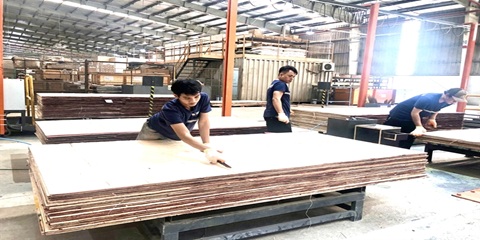
HCM CITY SAYS HOW IT PLANS TO ACHIEVE 10-11% ANNUAL EXPORT GROWTH FOR REST OF DECADE
The southern economic hub aims to strengthen its role as the country’s largest import-export centre while developing into a regional transhipment centre in Southeast Asia, supported by green and digital transformation and a circular economy. HCM City has outlined measures to expand production capacity, cut logistics costs, diversify export markets, and help businesses meet increasingly stringent international standards as it targets average annual export growth of 10-11 per cent through 2030.
VIETNAM ECONOMY INVESTMENT
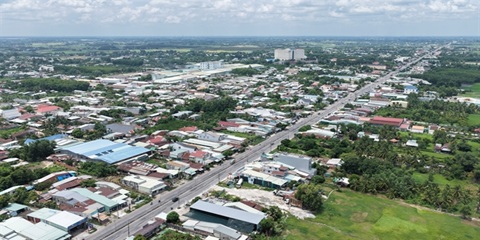
HCM CITY LEADS ECONOMIC RESTRUCTURING IN SOUTHEAST REGION
According to Associate Professor, Dr Vũ Tuấn Hưng, director of the Institute of Social Sciences of the Southern Region, the Southeast is a strategically important socio-economic space in Việt Nam’s development given its advantages in location, industry, trade, services, logistics, science and technology, urbanisation and human resources.
TECHNOLOGY
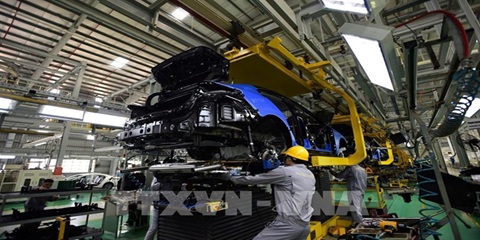
DIGITAL TRANSFORMATION TURNED INTO PRACTICAL TOOLS FOR PEOPLE, BUSINESSES
Việt Nam is moving its digital transformation agenda beyond policy frameworks and individual technology platforms towards practical applications that address everyday needs, as authorities seek measurable outcomes from science, technology and innovation. Under Politburo Resolution No. 57-NQ/TW issued on December 22, 2024, the implementation is increasingly shifting from simply completing assigned tasks towards developing concrete products and services for citizens and businesses.
TECHNOLOGY
APPLYING TECHNOLOGY FOR ECONOMIC TRANSFORMATION
Having completed its new rural development program, Hanoi is shifting its focus toward improving development quality and building smart, sustainable rural areas. The transformation of Dong La orchid-growing village in An Khanh, a western commune of Hanoi, shows how digital technology is becoming a driver of production, market expansion, and higher incomes for local residents.

MEMBER CORNER / PROMOTIONS
VIGLACERA HONORED AS THE "LEADING GREEN INDUSTRIAL REAL ESTATE DEVELOPER 2026"
Organized by the Vietnam Investment Review, this prestigious awards program recognizes industry pioneers advancing eco-industrial parks, clean energy transition, and rigorous ESG standards. Outperforming competitors through a rigorous evaluation, Viglacera Corporation – JSC proudly ranked among the Top 5 highest-positioned enterprises in the Leading Green Industrial Real Estate Developers 2026 category, reinforcing its premier position in Vietnam’s industrial real estate sector.
Events Sponsors






















